
Anonymous Email for Newsletter Signups
Using an anonymous email for newsletter signups is one of the simplest ways to access content without filling your personal inbox with marketing emails. Many newsletters require email verification, but that does not mean you have to expose your real address.
This guide explains how anonymous email works for newsletters, when disposable email is a good choice, and how to use it safely without missing important content.
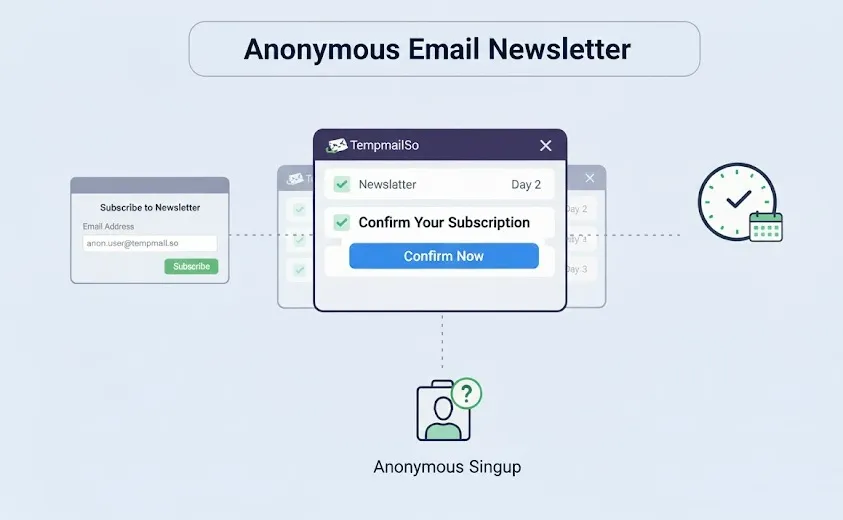
Why newsletters create spam problems
Many newsletters send more than just the content you signed up for. Over time, your email address may be shared across marketing lists or used for promotions you did not request.
Common issues include:
- Daily promotional emails
- Partner offers and cross-promotions
- Difficulty unsubscribing
Using a disposable inbox separates newsletter activity from your main email account.
How anonymous email works for newsletter signups
An anonymous email address is a temporary inbox that does not require registration or personal details. You use it during signup, receive the confirmation email, and access the newsletter content.
This approach follows the same principle as temporary email usage for short-term access.
When anonymous email is a good choice
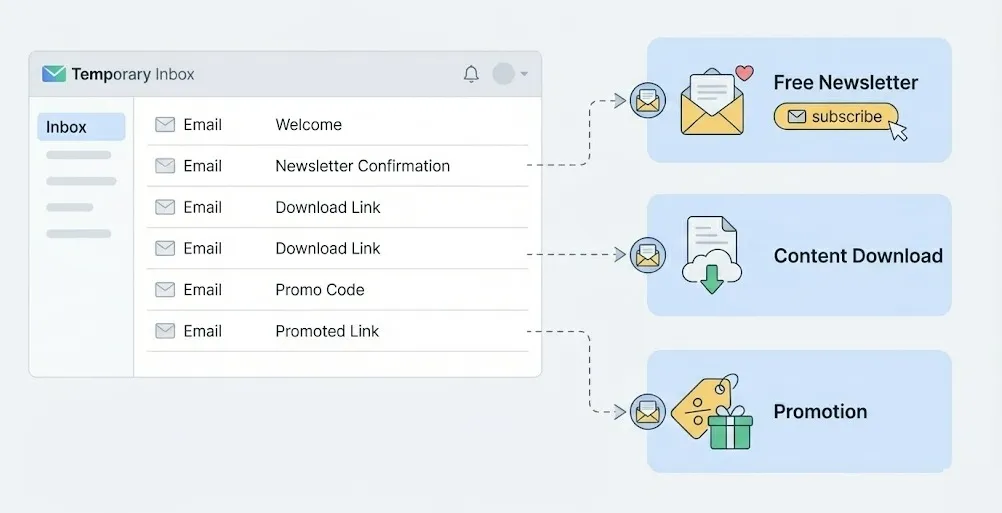
Disposable email works well for newsletters when the content is informational and does not require long-term account recovery.
- Free newsletters and email courses
- Content downloads
- Early access announcements
- One-time promotions
This is similar to using a burner email for online registration, where privacy matters more than permanence.
When anonymous email is not recommended
Some newsletters are tied to paid subscriptions or long-term accounts. In these cases, using a disposable inbox can cause problems later.
- Paid newsletter subscriptions
- Newsletters tied to user accounts
- Content that requires password recovery
If ongoing access matters, a regular email address is the safer choice. This limitation is related to whether temporary email is safe for long-term use.
Inbox lifespan and newsletter access
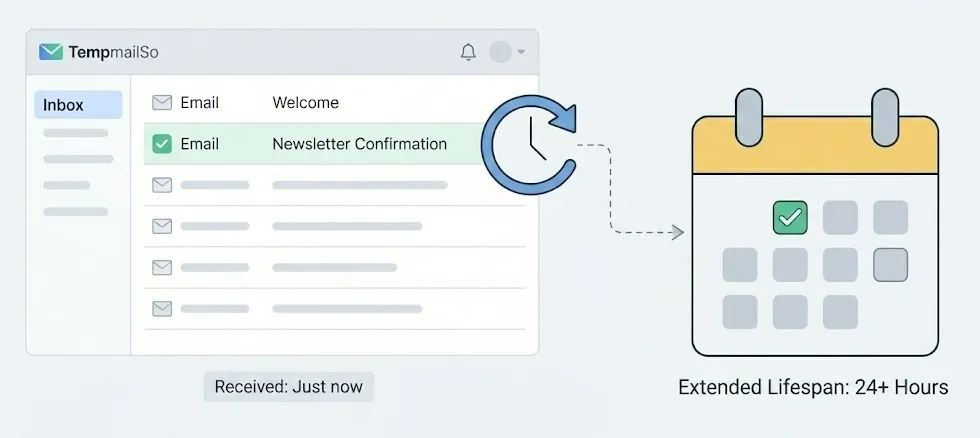
Newsletter confirmation emails may arrive instantly or after a delay. Short-lived inboxes sometimes expire before confirmation messages arrive.
Longer lifespan disposable inboxes reduce this risk and allow time to confirm subscriptions. This difference is explained when comparing how long a temporary email lasts.
Reusing an anonymous inbox
Some services allow anonymous inbox reuse. This means you can return to the same address to check for follow-up messages, even if older emails were deleted.
On TempmailSo, inboxes can be reused, while all messages are deleted after 30 days. This allows short-term access without long-term storage.
Accessing newsletters on another device
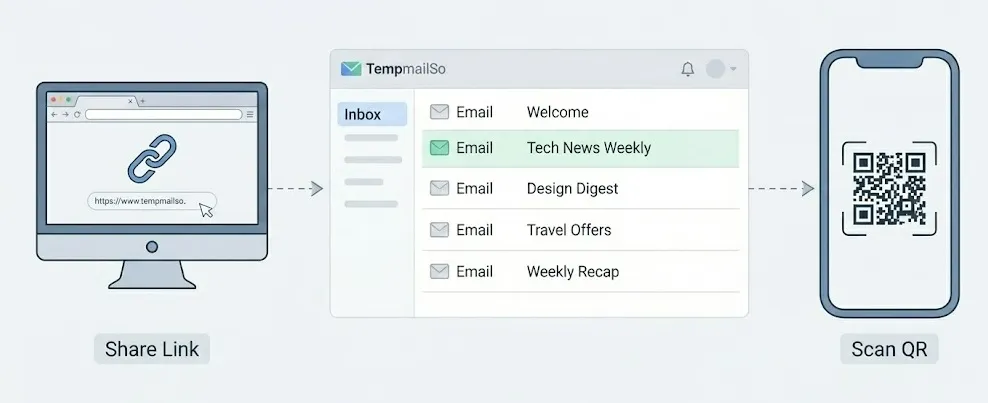
You may sign up for a newsletter on one device and read it on another. Inbox sharing via link or QR code allows the same temporary inbox to be accessed across devices.
This feature is useful for convenience, but it should only be used for non-sensitive newsletters.
Best practices for anonymous newsletter signups
To avoid issues while using anonymous email for newsletters:
- Use disposable email only for free or low-risk newsletters
- Confirm subscriptions as soon as emails arrive
- Do not rely on temp mail for paid content
- Expect messages to be deleted automatically
Frequently asked questions
Do all newsletters accept anonymous email?
No. Some publishers block disposable domains to limit automated signups.
Can I unsubscribe from a newsletter using temp mail?
Yes, as long as the inbox is still available when the unsubscribe email arrives.
Is anonymous email legal for newsletters?
Yes. Using disposable email is legal when used in accordance with publisher terms.
Conclusion
Anonymous email is a practical way to enjoy newsletters without sacrificing your inbox or privacy. It works best for free content, promotions, and short-term subscriptions.
For sensitive, paid, or long-term newsletters, a regular email address remains the better option. Usage boundaries and limitations are described in the Disclaimer.