
20 Most Asked Questions About Temporary Email
Temporary email is widely used for signups, free trials, AI tools, and testing online services without exposing a personal inbox to spam, newsletters, or long-term marketing campaigns.
Based on real search behavior and common user intent, most people are not trying to understand “what is temporary email” in theory - they are trying to solve practical problems like spam control, quick verification, and trial access without commitment. In fact, privacy research shows growing concern about email exposure in online signups. According to a Pew Research study, a large majority of users express concern about how companies collect and use personal data, including email addresses.
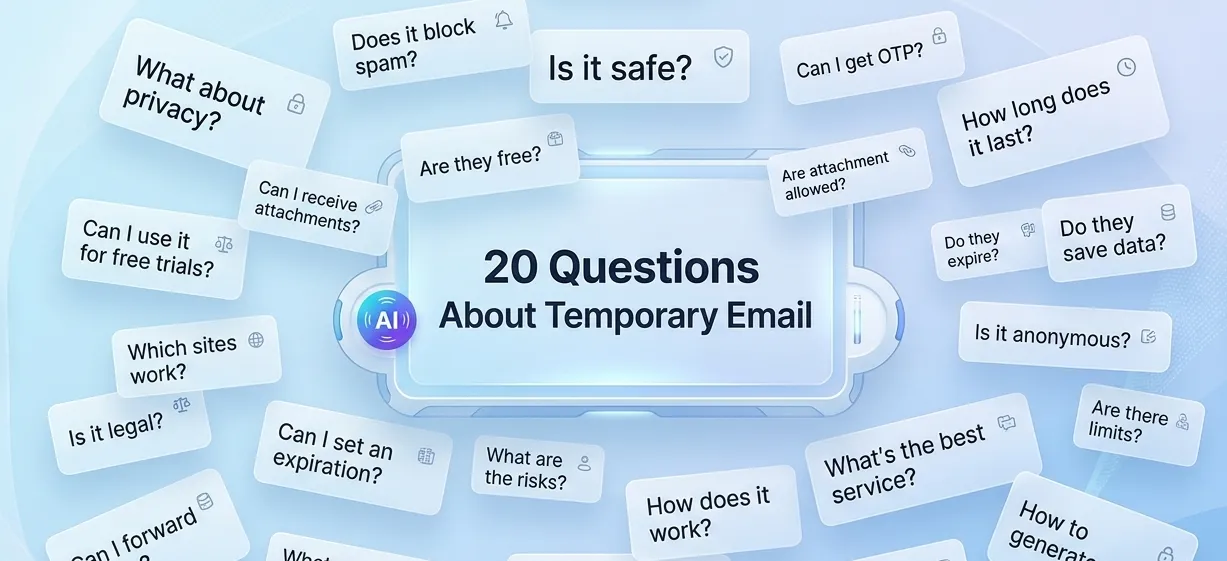
Below are the 20 most commonly asked questions about temporary email, explained in simple, practical language with real-world context.
1. What is a temporary email?
A temporary email is a disposable inbox that allows you to receive messages without using your personal email address. It is mainly used for short-term tasks like signups, downloads, or verification.
2. Is temporary email safe?
Yes, it is generally safe for low-risk activities. However, it should never be used for banking, government services, or important accounts. Think of it as a “throwaway inbox” for non-critical use. For more detail, see is temporary email safe.
3. Why do people use temporary email?
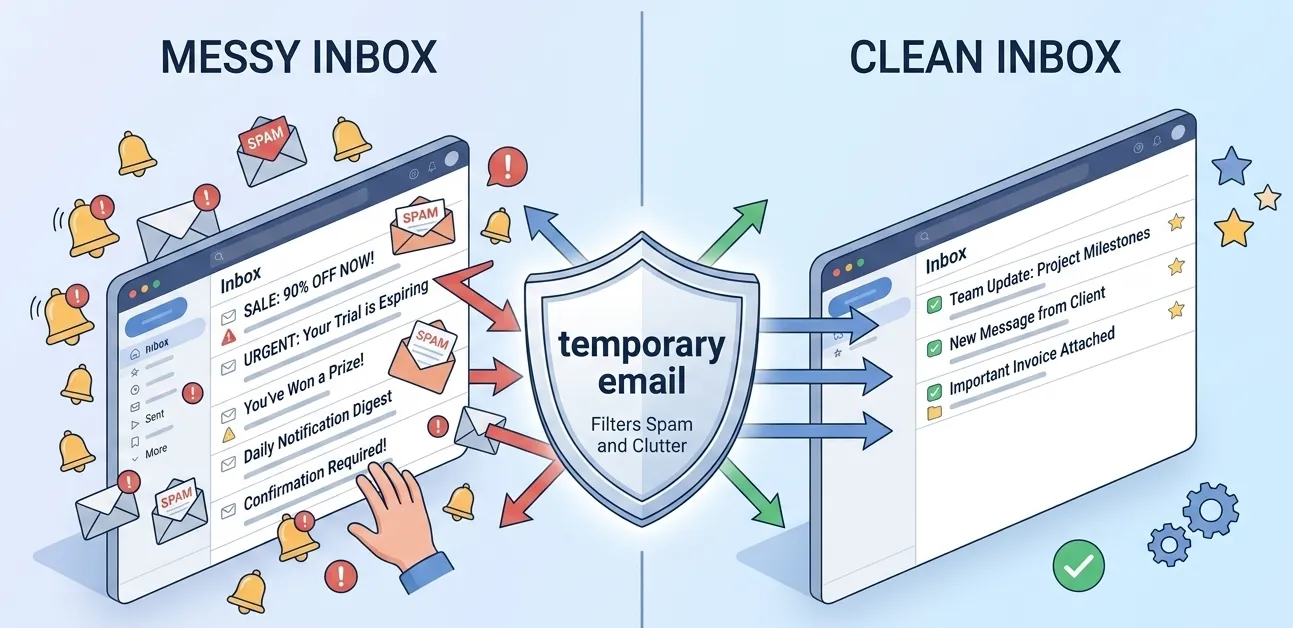
Most users use it to avoid spam, protect privacy, and reduce inbox clutter. A common trigger is signing up for a website just to test it once, then receiving marketing emails for months afterward.
4. Can I receive OTP with temporary email?
Yes. Many platforms send OTP (one-time passwords) successfully. However, some high-security websites block disposable domains to reduce fake account creation.
5. Does temporary email hide my identity?
It hides your personal inbox address, but it does not make you fully anonymous online. Your IP address and browser activity may still be visible to websites.
6. Can websites detect temporary emails?
Yes. Many websites use domain filtering systems to detect and block disposable email providers. This is especially common in fintech, SaaS, and social platforms.
7. How long does a temporary email last?
Most temporary email services last from a few minutes to several hours or days depending on activity. They are not designed for long-term storage or recovery.
8. Can I recover a temporary email inbox?
No. Once the session expires or the inbox is removed, messages cannot be recovered. This is intentional for privacy and security reasons.
9. Is temporary email legal?
Yes, in most countries it is legal when used for legitimate purposes like testing services or protecting privacy. However, using it for fraud or abuse is not allowed.
10. Can I use temporary email for free trials?
Yes, this is one of the most common use cases. Many users use it to test SaaS tools, AI platforms, and online services without receiving long-term marketing emails.
11. Can I use temporary email for AI tools?
Yes. Many people use it to try AI tools like chatbots, image generators, and productivity apps before deciding to subscribe.
12. Will I still get verification emails?
Yes, in most cases verification emails are delivered successfully unless the website blocks the domain or uses advanced filtering.
13. Can I send emails from temporary email?
Most temporary email services are receive-only. This reduces abuse and keeps the system simple and secure.
14. Why do companies block temporary email?
Companies block disposable emails to prevent spam accounts, fake signups, abuse of free trials, and automated bot registrations.
15. Can temporary email stop spam completely?
No. It reduces spam from specific signups, but it does not block spam from other sources like leaked databases or third-party marketing lists.
16. Is temporary email better than Gmail aliases?
It depends. Temporary email is faster for one-time use, while Gmail aliases are better for long-term filtering and account organization.
17. Can I use temporary email for social media?
Yes, but it is not recommended for long-term use because account recovery becomes difficult if the inbox expires.
18. Does temporary email work for all websites?
No. Some websites fully block disposable email domains, especially financial services and large SaaS platforms.
19. Is temporary email free?
Yes. Most services, including TempmailSo, are free for basic temporary inbox usage.
20. What is the best use case for temporary email?
The best use cases include free trial signups, testing websites, downloading resources, AI tool trials, and avoiding spam from one-time registrations.
Key Insights from User Behavior
- Studies suggest over 70% of users are concerned about email-based tracking and marketing spam (Pew Research Center)
- A significant portion of temporary email usage is related to free trials and SaaS testing workflows
- AI tool signups have become one of the fastest-growing use cases for disposable email services
Related guide: temporary email for testing websites
External References
Conclusion
Temporary email is not just a “spam trick” - it is a practical privacy tool for modern internet users. From free trials to AI tools and website testing, understanding these 20 questions helps users make smarter decisions about when to protect their inbox and when to use a permanent email.