
A temporary email (also called a temporary email address, temporary disposable mail, disposable email address, or burner email) is a short-term inbox used to receive emails without exposing your personal email account.
It is comonly used for free trials, online registrations, testing apps, and avoiding spam from unknown services. A free temporary email allows users to generate a temp mail inbox instantly without registration.
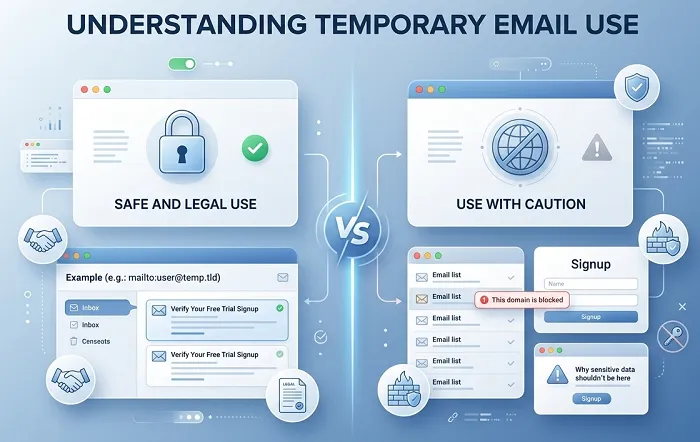
What is a temporary email and how does it work?
A temporary email address works by creating a disposable inbox that receive messages without requiring user registration.
When a website sends an email (like verification or OTP), the message is delivered directly to the temporary disposable mail inbox instead of your personal email provider like Gmail or Outlook.
This makes it useful as a temporary email generator for quick signups and testing purposes.
If you want a full breakdown of how it works, you can read our guide on what is temporary email.
Is temporary email safe to use?
A temporary email is generally safe when used for low-risk activities such as testing websites, receiving verification emails, or signing up for free tools.
It reduces spam exposure because your real inbox is not shared with unknown platforms. This is why many users prefer a burner email instead of a permanent email account.
A temporary disposable mail should NOT be used for banking, government accounts, or long-term identity-based services that require permanent access or identity verification.
For deeper safety analysis, see is temporary email safe.
Is temp email illegal?
Using temp mail services is NOT illegal in most countries.
A disposable email address is simply a privatecy tool. However, using it for fraud, fake account creation, or bypassing platform rules may violate terms of service or legal policies.
So the tool itself is legal, but misuse determines the risk.
Can websites block temporary email addresses?
Yes, many websites actively block known temporary email addresses used for free trial signups.
This is done to prevent spam, fake accounts, and abuse of free services. Many platforms detect domains commonly used by temp mail providers.
However, not all websites blocked them, and many still allow temporary email for quick verification or testing.
Read more usage examples in temporary email for free trial signups.
Why websites restrict disposable emails
Websites use email verification systems to protect user quality and prevent abuse. A temporary disposable mail can reduce data accuracy and increase fake signups.
- Prevent spam registrations
- Reduce abuse of free trials
- Improve platform security
- Maintain real user data quality
These restrictions are not against temporary email itself but against misuse.
When temporary email is safe to use
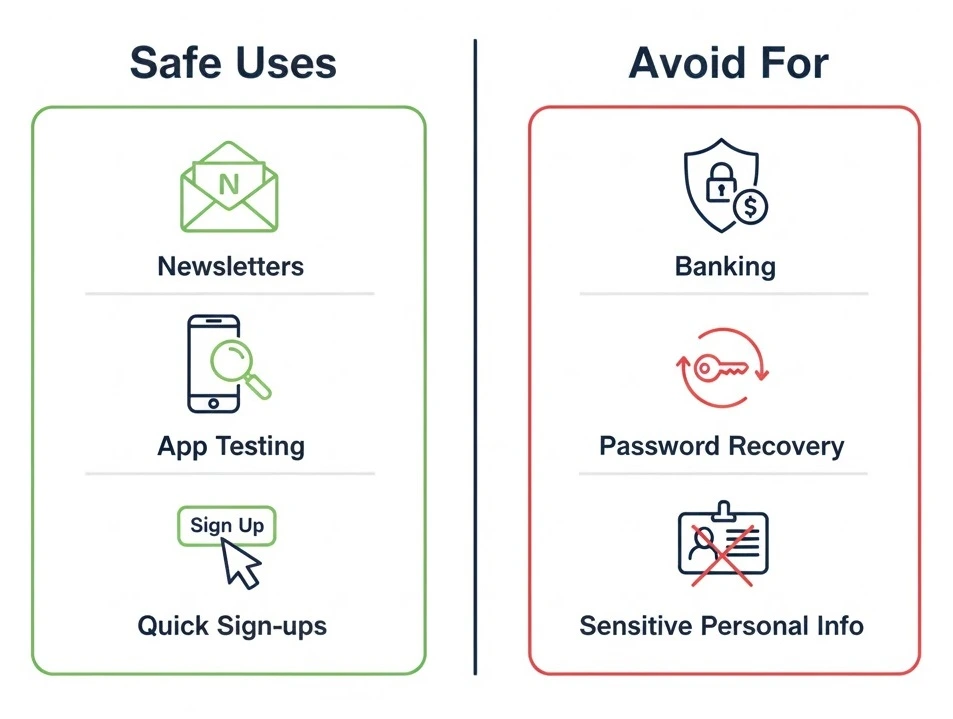
A free temporary email is safe when used for short-term and non-sensitive tasks.
- Signing up for newsletters
- Testing apps and websites
- Receiving OTP or verification codes
- Downloading gated content
When you should NOT use temporary email
A temporary email address should NOT be used for sensitive or long-term accounts.
- Banking or financial services
- Government accounts
- Password recovery emails
- Business-critical platforms
Since a temporary disposable mail may expire, access to recovery emails can be permanently lost.
Temporary email vs security risk
A temp mail system does not increase security risk when used correctly. In fact, it reduces exposure of your real identity online by limiting where your personal email address is shared.
The real risk comes from using a burner email for accounts that requier permanent access or identity verification.
A temporary email is legal, safe, and widely used for privacy protection when applied correctly.
It helps users avoid spam, protect identity, and test online services without exposing their real inbox.
With TempmailSo, users can generate a free temporary email or temporary disposable mail instantly without registration.